

When a Website Builder Makes Sense (and When It Should Be Built from Scratch)
Published
Website builders like Wix, Webflow, and WordPress can feel like the fastest path to launching a site...but speed isn’t always the same as flexibility, performance, or long-term control. Here’s how to think about the tradeoffs before you commit.


Since 2017, we've built software for businesses of all sizes, from early-stage startups to established organizations. The company's goal is to create lasting value throughout the entire digital transformation journey.
Introduction
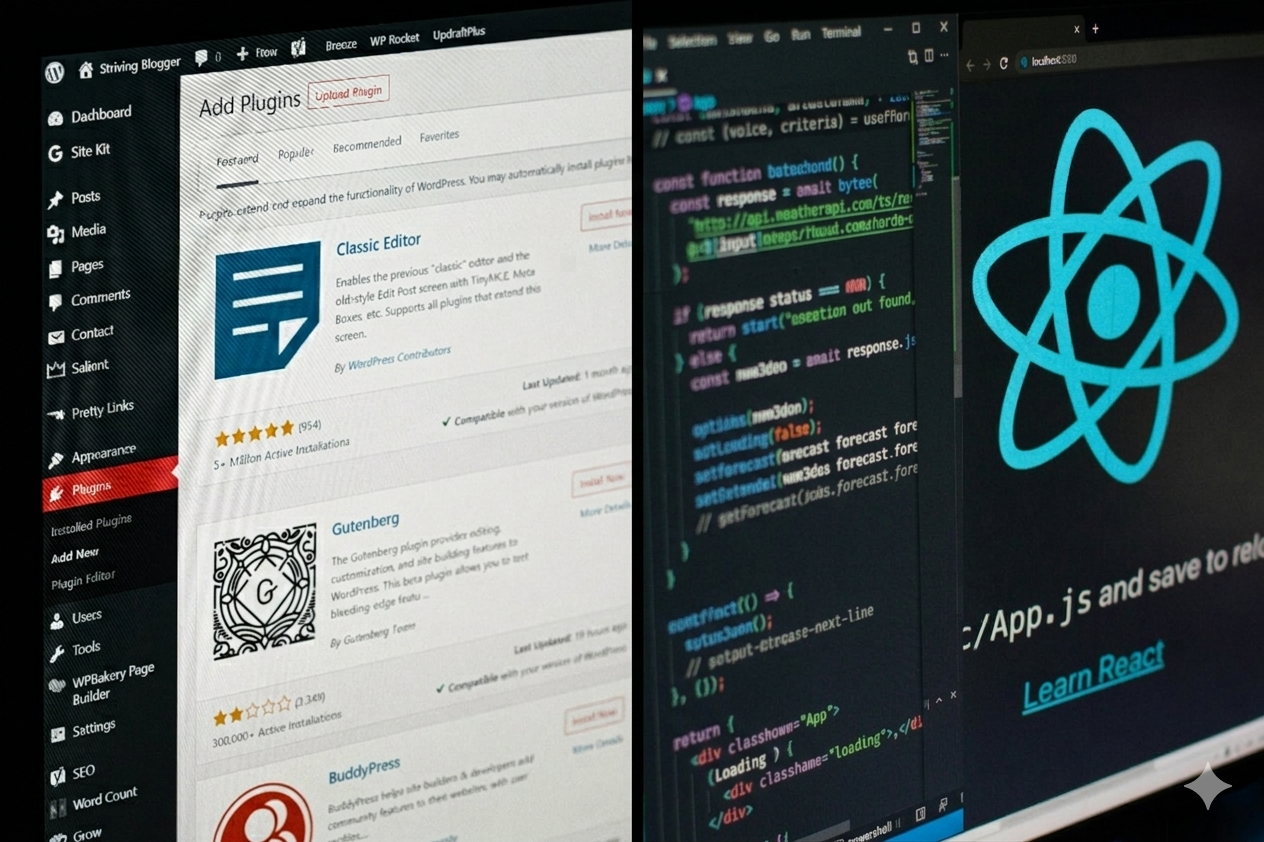
Most businesses don’t start by asking whether they need a fully custom website. The question is usually simpler: what’s the fastest way to get something online? That’s what leads many teams to website builders like WordPress, Webflow, Wix.
They solve the immediate problem well. You can launch quickly, make updates without a developer, and get something that looks polished without a large upfront investment. For early-stage projects, that’s often enough.
The tradeoffs tend to show up later.
Why Website Builders Work (At First)
Website builders are optimized for speed and accessibility. Templates, drag-and-drop editors, and built-in hosting remove a lot of the friction that typically comes with building a site.
For simple use cases like landing pages, small business sites, early MVPs, they can be the right tool. They make it easy to move fast without overthinking architecture or long-term scalability.
As long as your needs stay within the boundaries of the platform, everything works as expected.
Where the Friction Starts
The limitations don’t usually appear all at once. They show up as the site becomes more important to the business.
Performance is often one of the first issues. Builders prioritize ease of use over fine control, which can lead to heavier pages and slower load times as complexity increases.
Design flexibility follows a similar pattern. While customization is possible, it still happens within a structured system. Over time, teams run into layout constraints or find themselves making compromises to fit what the platform allows.
Responsiveness is another common friction point. Although most builders claim mobile-friendly support, real-world behavior can be inconsistent. Layouts may not translate cleanly across devices, and fixing those issues isn’t always intuitive. Instead of making precise adjustments, teams often rely on trial-and-error tweaks, which can lead to fragile or inconsistent mobile experiences.
There’s also the question of ownership. Builder platforms tie your site to their system, which makes migrating or extending beyond their capabilities more difficult. What starts as convenience can become dependency.
When a Website Builder Actually Makes Sense
Despite these drawbacks, builders are still a good choice in the right context.
They make sense when speed matters more than long-term flexibility. Validating an idea, launching a temporary campaign, or creating a simple online presence doesn’t require complex functionality.
In those cases, the ability to get live quickly outweighs the limitations.
The key is recognizing that builders are designed for convenience, not long-term adaptability.
What Changes When You Build from Scratch
A site built from the ground up isn’t shaped by a predefined system. Instead, the structure, performance, and behavior are designed around the needs of the business.
That changes a few important things. Performance can be optimized more intentionally, rather than working around platform defaults. Design decisions aren’t limited by templates or layout systems. Responsiveness is handled deliberately, which leads to more consistent experiences across devices.
It also makes the site easier to evolve. New features, integrations, and workflows can be added without stacking plugins or working around constraints. The system grows with the business instead of resisting it.
This is typically the point where teams move away from builders and start working with partners like BitWerks to create something that’s designed for how they actually operate.
The Real Tradeoff
This isn’t really a question of “which is better.”
It’s a question of timing.
Website builders optimize for speed and simplicity. Building from scratch optimizes for control and flexibility. The right choice depends on how important the website is to the business and how much it’s expected to grow.
Conclusion
Website builders are useful tools, especially early on. They make it easy to launch and reduce the barrier to getting online.
But they’re not designed to support everything that comes after.
As a site grows in importance, the limitations that once felt invisible start to shape what’s possible. Recognizing that shift is what allows teams to move from assembling a website to building one that can actually keep up.